


Ball Valves Female X Female NPT
Price range: $7.24 through $11.64
Aignep Standard Brass Ball Valve (Series 86310)
The Industrial Workhorse for Air & Fluid Control
Control your system with confidence using the Aignep Series 86310 Ball Valve. While the Infinity aluminum pipe gets the air where it needs to go, this heavy-duty brass valve is the component that gives you control—allowing you to isolate lines, shut off equipment, or section off zones for maintenance.
Part of Aignep’s “Ghilux” or Standard Industrial line, this valve is engineered for superior longevity compared to the cheap, throw-away valves often found at hardware stores. It features a Full Bore design, meaning the internal hole is the same size as the pipe, ensuring you get zero pressure drop and maximum flow to your tools.
Key Features & Benefits
- Full Port Flow:
Unlike “reduced port” valves that constrict airflow, the 86310 allows air to pass through unrestricted. If you have a 1/2″ pipe, you get a full 1/2″ hole through the ball.
- Chrome-Plated Durability: The valve body is made from OT58 Brass and finished with a heavy Nickel/Chrome Plating. This not only looks professional (matching the high-end aesthetic of Infinity piping) but protects the brass from corrosion and wear in harsh shop environments.
- Blow-Out Proof Stem: Designed for safety. The internal stem is inserted from the inside, meaning that even if the valve is subjected to massive over-pressure, the stem cannot physically be blown out of the body, protecting the operator.
- PTFE (Teflon) Seals: The ball sits against self-lubricating PTFE seats. This ensures that the valve remains easy to turn even after sitting idle for months, and provides a bubble-tight seal that prevents expensive air leaks.
- Anti-Vibration Handle: Equipped with a steel lever handle coated in grippy PVC. The nut securing the handle is designed to resist loosening from compressor vibration.
Technical Specifications
- Series: 86310 (Standard NPT)
- Connection: Female NPT x Female NPT
- Configuration: 2-Way, Manual Shut-Off
- Body Material: Nickel-Plated Brass (OT58)
- Ball Material: Chrome-Plated Brass
- Seal Material: PTFE (Seats) / Viton (Stem O-Ring)
- Pressure Rating: Up to 580 PSI (40 Bar) – Dependent on size
- Temperature Range: -4°F to +250°F (-20°C to +120°C)
- Handle: Red/Black PVC Coated Steel Lever
Ideal Applications
- Zone Isolation: Installing at the beginning of each branch line (e.g., screwed into an Infinity Threaded Tee) to allow you to shut off one section of the building without turning off the compressor.
- Machine Drops: The final shut-off point at the bottom of a drop leg before the quick coupler.
- Compressor Isolation: Plumbed between the tank and the main header to isolate the compressor for service.
Installation Tip
Don’t Over-Tighten: These valves feature tapered NPT threads. When installing into an aluminum fitting or steel pipe, use a quality thread sealant (like Loctite 567 or Teflon tape) and tighten until snug. Over-tightening can distort the brass body and cause the internal ball to bind.
Stop leaks and take control. Upgrade your isolation points with the Aignep 86310 Ball Valve.

| USA REF | A NPTF | B NPTF | D.N. | ES | L | G | H | Bag |
|---|---|---|---|---|---|---|---|---|
| 86300-02-02 | 1/8 | 1/8 | 0.236 (6) | 0.551 (14) - 0.591(15) | 1.476 (37.5) | 0.748 (19) | 0.827 (21) | 10 |
| 86300-04-04 | 1/4 | 1/4 | 0.236 (6) | 0.551 (14) - 0.591(15) | 1.811 (46) | 0.748 (19) | 0.827 (21) | 10 |
| 86300-06-06 | 3/8 | 3/8 | 0.315 (8) | 0.709 (18) - 0.748 (19) | 1.909 (48.5) | 0.748 (19) | 0.866 (22) | 10 |
| 86300-08-08 | 1/2 | 1/2 | 0.394 (10) | 0.866 (22) - 0.906 (23) | 2.441 (62) | 1.024 (26) | 1.201 (30.5) | 10 |
Related products


Flanged Straight Male Adapter
Price range: $160.43 through $525.50 Select options This product has multiple variants. The options may be chosen on the product page


Infinity Tube-to-Tube Ball Valve
Price range: $58.27 through $509.44 Select options This product has multiple variants. The options may be chosen on the product page


Ball Valves Standard NPT
Price range: $7.24 through $31.50 Select options This product has multiple variants. The options may be chosen on the product page
Butterfly Valve
Price range: $408.46 through $687.83 Select options This product has multiple variants. The options may be chosen on the product page

Double Outlet Elbow 1/2″ NPT Female With Mounting Bracket
Price range: $43.79 through $46.92 Select options This product has multiple variants. The options may be chosen on the product page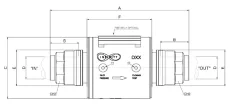

Infinity Pneumatic Axial Valve
Price range: $314.11 through $555.96 Select options This product has multiple variants. The options may be chosen on the product page


Infinity Stem Adapters FNPT
Price range: $17.37 through $114.57 Select options This product has multiple variants. The options may be chosen on the product page

Double Outlet 45 Degree Elbow 1/2″ NPT Female With Mounting Bracket
Price range: $105.73 through $137.08 Select options This product has multiple variants. The options may be chosen on the product page

Infinity Threaded Valve
Price range: $50.81 through $110.54 Select options This product has multiple variants. The options may be chosen on the product page
